
A clean, well-groomed complexion, healthy nails, shiny hair - these are elements we often treat as a hallmark of health and well-being. But in this mix, we too rarely think about... the scalp. And yet, the scalp is responsible for the way our hair looks and grows. If the scalp is not functioning properly, not even the best shampoo or supplement will help.
This is where trichology comes in - a field that has turned hair care into a science and help with everyday problems into a real speciality. A trichologist is an expert on the scalp and hairwhich helps to discover and solve the causes of seemingly insurmountable problems.
In this article we will show why A healthy scalp is the key to beautiful hair and a better sense of well-being, what the work of a trichologist is like and how it can make a real difference to your everyday life - not only aesthetically, but also health-wise.
The scalp - underestimated but so important
The scalp is the part of the body that is... out of sight. Perhaps that is why we so often ignore it. However, it is where the hair follicles, sebaceous and sweat glands, nerve endings and blood vessels are located. It is here that the hair growth cycle takes place, it is here that sebum accumulates, the epidermis exfoliates, and it is also here that inflammation, dryness, infection or disruption of the microbiome can occur.
Healthy scalp = healthy, strong, thick hair.
Sick, dry, oily or itchy scalp = hair loss, brittleness, lack of shine and reduced wellbeing.
Daily symptoms that say 'do something about it'
Many people do not realise that scalp problems are not just dandruff. Here are the signs that should get your attention:
-
Itching, burning, sensation of tension on the scalp,
-
Dandruff - both dry and oily, adherent,
-
excessive greasiness of the hair despite daily washing,
-
visible thinning of the hairstyle,
-
excessive hair loss, either by handfuls or by spots,
-
The feeling of "unwashed skin", despite regular care,
-
allergic reactions to hair cosmetics.
These are signals that the protective barrier of the scalp has been disruptedand the body is trying to tell you that something is wrong.
Trichologist - a specialist who looks deeper
Trichologist Swidnik is a person who not only "knows hair", but above all diagnoses scalp problems and restores its biological balance. His work combines knowledge from dermatology, cosmetology, dietetics, physiology and microbiology.
A trichologist does not assess a problem at a glance. Each visit is a process:
-
Health and care history
The trichologist will ask you about your diet, lifestyle, hormones, stress, chronic diseases, cosmetics used and skincare rituals. -
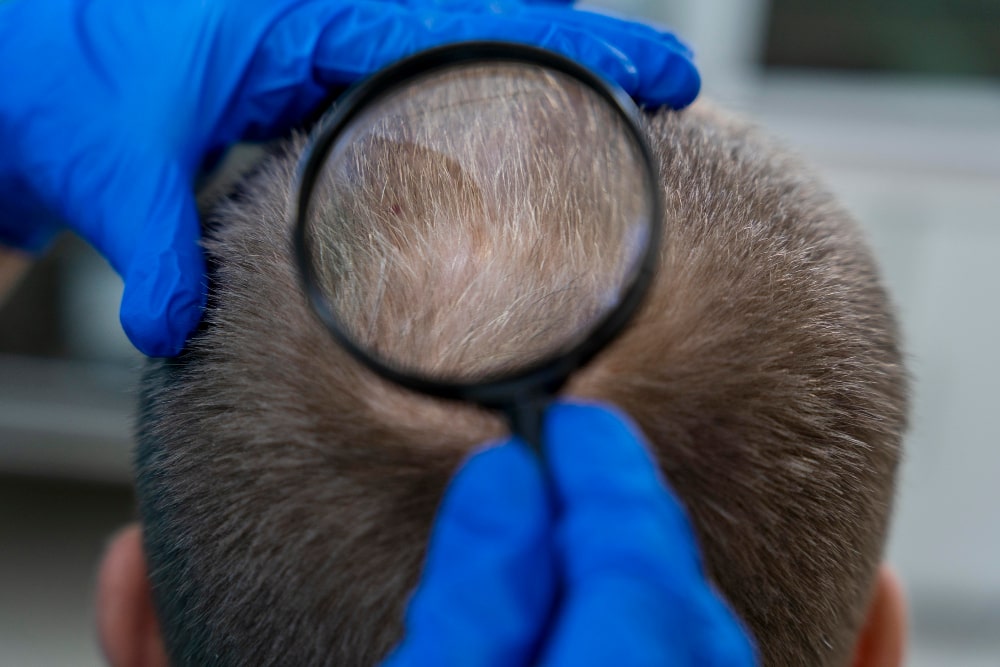
Trichoscopic examination
This is a professional examination of the scalp and hair using a high magnification camera and a mesotherapy Lublin. Allows detection of:
-
inflammations and infections,
-
miniaturisation of hair follicles,
-
overproduction of sebum or dryness,
-
microsclerosis and follicular obstruction,
-
the number of hairs in different growth phases.
-
Therapy plan
Based on the diagnosis, an individual plan is created, which may include:
-
cabinet treatments (cleansing, regenerating, stimulating),
-
care recommendations (e.g. change of shampoo, frequency of washing, massage technique),
-
supplementation or referral for laboratory tests.
What can a trichologist do in practice?
A trichologist won't work miracles - but does what no commercial shampoo can do. It can help you:
-
inhibit hair loss and accelerate hair regrowth,
-
eliminate chronic dandruff without aggressive preparations,
-
stabilise oily scalp,
-
rebuild the scalp microbiome after intensive colouring or styling,
-
prepare the skin for hair transplantation and promote regeneration after the procedure,
-
relieve itching, tension and inflammation of the skin.
Importantly, the trichologist does not have an immediate effectbut systemic. Instead of masking the symptoms, it looks for the cause and promotes the restoration of the skin's natural protective mechanisms.
How does trichology affect everyday life?
The effects of visits to a trichologist are not just limited to appearance:
-
better well-being - No itching, burning or embarrassment associated with dandruff,
-
greater self-confidence - the hairstyle looks good again and the scalp is no longer a problem,
-
saving - no more testing dozens of random cosmetics,
-
informed choices - you learn what is good for your skin and hair and what is bad for them.
Many trichologist clients are straightforward: 'I didn't know it could be fixed', or 'I thought I had to live with it'. It turns out you don't have to.
Bottom line - start with your skin and your hair will thank you
Trichology is not a luxury, but a response to a real need. The scalp is the foundation of healthy hair and a comfortable life - it is worth nurturing, observing and supporting it before a bigger problem arises.
If your hair is falling out, your skin is itchy, oily or peeling - don't delay. A trichologist can help you regain your balance, health and enjoyment of everyday life. Because when your scalp is functioning as it should, everything else - from your hairstyle to your mood - goes much better.


