
Welding is a process that may seem simple: you join two pieces of metal together, add some heat and you're done. However, any experienced welder knows that A really good weld is more than just the joining of two components. It is the result of precise technique, knowledge, experience and - let's not be afraid of the word - a personal touch.
Joints have their own aesthetics, structure and function. When they are done correctly, not only durable, but also stunning in appearance. In this article, we will show you what good welding looks like in practice, what affects the quality of the weld and why it is worth taking care of every detail - from the choice of method to the final finish.
What is a good weld?
At first glance, it may seem that every weld looks similar - metal fused together, surface more or less smooth, line more or less straight. But welding specialists will immediately notice the differenceswhich affect not only the aesthetics, but above all the durability and safety of the structure.
A good weld is characterised by:
-
homogeneity - no cracks, pores, underfills or overfills,
-
continuity - The weld must not be interrupted, it must have an even line,
-
smooth surface - without sharp edges or chipping,
-
appropriate section - neither too narrow nor excessively wide,
-
correct melting - the material must be bonded at full depth.
It all depends on a number of factors: welding methods, working parameters, material preparation and the skill of the welder.
Welding method and nature of the weld
The choice of welding technique is of great importance for the final result. Different methods work well under different conditions and produce different results - both in terms of appearance and mechanical properties.
MIG/MAG - fast and reliable welding
It is a method commonly used in construction and industry. It allows fast and durable welds, often with a clear weld shaft. It is efficient and versatile, but requires good parameter control to avoid splashes and pores.
TIG - precision and elegance
Welds made using the TIG method (non-fusible tungsten electrode welding) are extremely aesthetically pleasing, even and clean. This technique allows very precise arc guidance, making the welds look almost like a work of art - especially with thin stainless steel sheets.
Shielded electrode (MMA) - versatile but demanding
It is an ideal method in difficult conditions, but requires skill. MMA welds can be less aesthetically pleasing, especially without experience, but they offer great durability and are great for load-bearing structures.
Preparation of the material - a step not to be missed
Even the best welder and the most expensive equipment will not achieve a good result if the the material will not be adequately prepared. Dirt, rust, oil, paint or moisture are the enemies of a good weld.
Therefore, before welding:
-
clean the edges mechanically or chemically,
-
chamfers (sands) the edges to increase the surface area of adhesion,
-
elements with the correct gap and angle,
-
the welding area is protected against draughts and moisture.
It's like cooking - even the best chef can't prepare a good dish with poor ingredients.
Welding technique - every movement counts
Just guiding the torch or electrode is an art. Correct angle, speed, arc length, oscillating movement - all these affect the quality of the weld. The welder must adapt his technique to the position (e.g. Welding Wroclaw vertical or ceiling), the thickness of the material and the type of joint.
The most common mistakes are:
-
leading too fast - weld too narrow, poor fusion,
-
Guidance too slow - excessive tarnish, overheating of material,
-
unstable arc - uneven weld, spatter, gas inclusions,
-
poor parameter setting - inconsistency of the weld.
An experienced welder can control all this, which is why practice and experience are invaluable here.
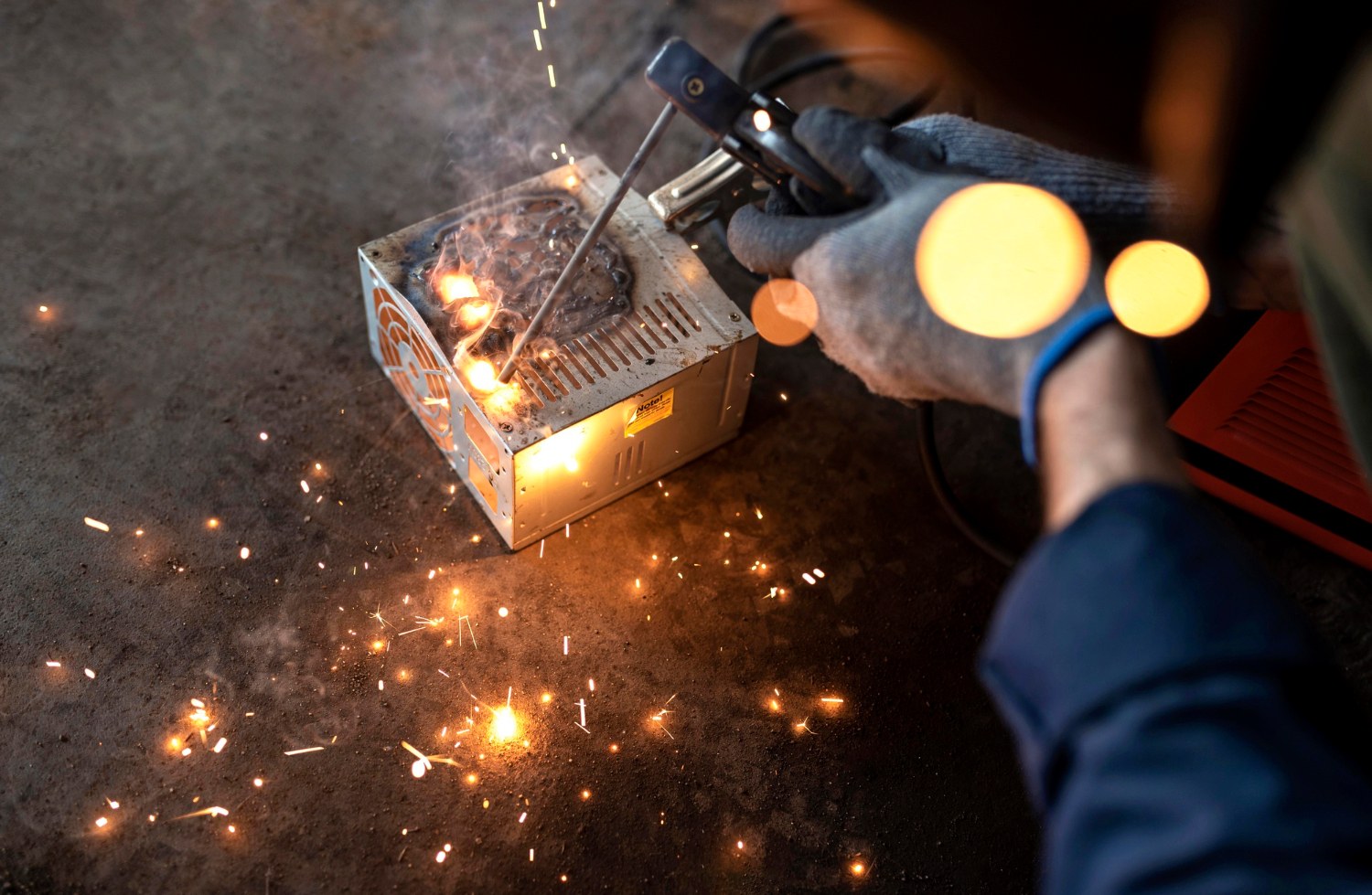
Joint aesthetics - also matters
Although many manufacturers focus solely on durability parameters, in many industries the appearance of the joint also plays an important role. In the food industry, chemical industry, aerospace, medical industry or with visible architectural elements - the joint must not only be durable, but also beautiful.
Good joint aesthetics are:
-
even line and symmetrical shape,
-
no linting or pitting,
-
the delicate transition between the weld and the parent material,
-
no splashes or discolouration.
Here again, TIG is the winner, but an experienced MIG welder can also achieve surprisingly beautiful results.
Inspection and testing - the weld must be secure
Once the weld has been made, it is time for assessment. The simplest methods are:
-
visual testing (VT) - basic visual inspection,
-
non-destructive testing (NDT) - e.g. penetrant, ultrasonic, magnetic, radiographic,
-
breaking and bending tests - on load-bearing components or in series production.
A good weld is one that not only does it look good, but above all it has stood the test of enduranceeven under the most demanding conditions.
Summary - the welds speak for themselves
Good Welding Lubin is not a coincidence. It's the result of a combination of adequate material preparation, proper technique, experience and accuracy. A joint that meets all standards, looks aesthetically pleasing and retains its function for years - that is the sign of a job well done.
It is not without reason that it is said that you know a welder by his weld. It is his signature, his calling card and his handiwork. For in the world of metal and fire, a weld with character is something that makes a difference - both in the durability of the construction and in the respect for craftsmanship.
And the next time you look at a bridge, railing, gate or tank, remember that it is there - often unnoticed - that the weld that holds everything together lies. Solidly, with precision and character.


