
Welding is not just about spectacular sparks and strong metal joints. It's also precision work that counts. experience, the right technique, parameter selection and... vigilance at every stage. Even a small error can affect the durability of the structure, the quality of the weld or the safety of use.
That is why it is worth knowing the most common pitfalls that beginners (and sometimes even experienced!) welders encounter. In this article, we'll show you 7 common mistakes made when welding and give you tips on how to avoid them - so that your work is not only sound, but also truly rewarding.
1. Poor surface preparation - welding on dirt
This is one of the most common mistakes that has a huge impact on the quality of the weld. Welding surfaces that have not been properly cleaned of rust, oil, paint, moisture or dirt can lead to:
-
the porosity of the joint,
-
lack of penetration,
-
chipping and cracking.
The solution? Always clean the joining area thoroughly before welding - use a wire brush, grinder, degreaser. The metal should be clean, dry and prepared as if for surgical precision!
2. Wrong choice of welding method for the type of material
Not every method suits every material. Often, someone tries to weld thin sheet metal using MMA (shielded metal electrode) and is surprised that the metal burns through. Or they use MIG to weld aluminium without changing wire or gas.
The solution? Match the method to the material:
-
carbon steel - MAG, MMA,
-
stainless steel - TIG, MAG with gas mixture,
-
aluminium - MIG with argon or TIG,
-
Thin sheet metal - preferably TIG or finely tuned MIG.
Before you fire up the welder, ask: Is this the right technique for my material?
3. Incorrect welding parameter settings
Current too low? Too high? Wire feed too fast? Electrode guiding too slow? Each of these errors affects the quality of the weld and Steel structures Rawicz. Typical effects include:
-
no blending in,
-
remelting,
-
porosity,
-
unstable arc,
-
too many splashes.
The solution? Use the manufacturer's tables, perform tests on similar material and learn to 'read the weld pool'. It is practice that makes perfect, but parameters are the foundation.
4. Curve leading too fast or too slow
Welding speed is something you learn over time, but you need to be vigilant from the start. If you move the torch or electrode too fast - the weld will be narrow, shallow and weak. If you move too slowly - lint will form, unsightly 'mountains' and the risk of melting.
The solution? Keep steady, rhythmic pace, observe the width of the weld and the lake. Try not to make sudden changes of direction or speed.
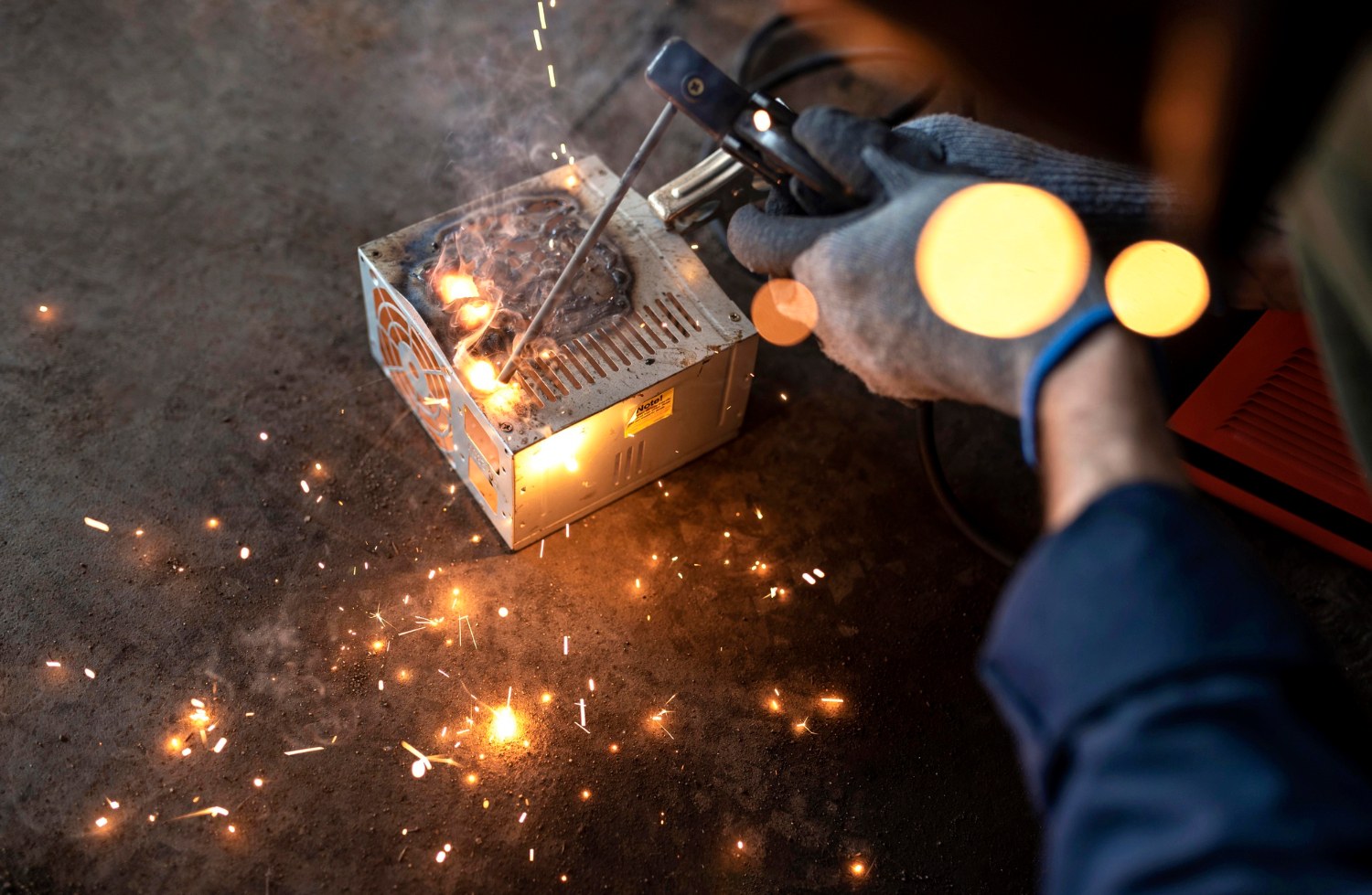
5. Wrong position and awkward positioning of elements
Welding in an awkward position (e.g. on one's knee, at an angle, without support) is an easy route to mistakes: an unstable arc, uncontrolled feed or uneven welds. Likewise, if the workpieces are poorly aligned - at the wrong angle, with a gap or tension - the weld will not hold as needed.
The solution? Take care of ergonomics at work:
-
Place the elements on a stable table,
-
Support your hand,
-
ensure good visibility of the lake,
-
if you are welding larger structures - use grips, clamps or work tables.
Comfortable position = greater precision.
6. Lack of quality control and skipping the sample
Many welders - especially beginners - go straight to the final piece, skipping the test welds. Meanwhile, each material may behave differentlyand the equipment may require adjustment after prolonged downtime.
The solution? Do always a short test on a piece of the same material, before moving on to the actual construction. Check:
-
arch stability,
-
quality of the weld,
-
possible contamination,
-
the appearance and shape of the lake.
It's a few minutes that can save hours of revision.
7. Ignoring health and safety rules and inadequate personal protection
Welding without proper attire, gloves, mask or ventilation is not only a risk of burns and paralysis, but also of long-term health risks: eye diseases, skin diseases, lung diseases. And yet one welds to create - not to harm oneself.
The solution? Always:
-
use professional visor with automatic filter,
-
Carry gloves, apron and protective clothing,
-
work in a well-ventilated place,
-
do not weld balustrades Poznań near flammable materials.
Safety is not an exaggeration - it is fundamental.
Conclusion - weld wisely and the results will surprise you
Welding is not just about strength and technology - it is an art that requires precision, knowledge and attention to detail. Avoiding mistakes is the first step to making your welds durable, aesthetically pleasing and safe.
So remember: prepare the material well, choose the right method, set the right parameters, take care of the positioning, do a trial and... don't forget safety!
And if you want everything to go without stress - get the help of professionals. Because A good welder not only fuses the metal, but also gives you a guarantee that the structure will last for many years. No cracks, no patches, no surprises.
Because welding is not fortune telling with sparks - it's a solid job that starts with avoiding simple mistakes!


