
The construction industry has undergone a huge transformation in recent decades. Innovations that used to be associated only with modern machinery or investment management systems are now also reaching out to those elements that for years were considered static and unchangeable. One of these is scaffolding - the foundation of any major construction, renovation or modernisation.
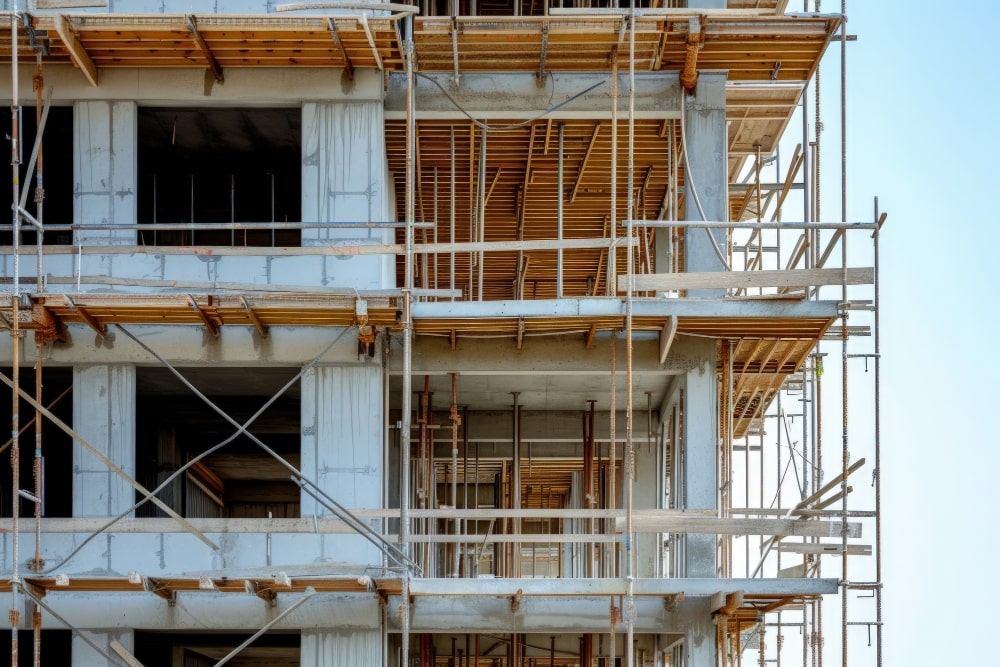
Although they seem simple - a few pipes, a couple of joints, a steel frame and a platform - the modern scaffolding is becoming an increasingly sophisticated technical constructionwhich are changing the way construction work is carried out. Below, we take a look at how scaffolding has evolved and which technological solutions are the reason why we are now talking about a new generation of scaffolding.
Modularity - freedom of configuration for any project
One of the biggest changes that has taken place in recent years is the development of modular systems. Traditional frame scaffolding, while still popular, has limited flexibility. Meanwhile, modern modular systems allow:
-
create irregularly shaped scaffolding,
-
adapt the structure to historic, industrial or engineering structures,
-
build in hard-to-reach areas - e.g. around chimneys, tanks, towers or cranes,
-
freely combine elements vertically, horizontally and at an angle.
This flexibility makes Christmas tree scaffolding new generation speed up construction work, reduce costs and eliminate the need to adapt structures "by force".
Lightweight and robust - new materials for mobility
Traditional structural steel, although reliable, is now giving way to new materials - the aluminium alloys, high-strength steels and even composites. As a result, contemporary scaffolding:
-
are lighter, making them easier to transport, assemble and disassemble,
-
without losing load-bearing capacity and stability,
-
better withstand difficult weather conditions (corrosion, humidity, fluctuating temperatures),
-
require fewer people when folding.
Lightweight scaffolding is not just about convenience - it's also about less fuel consumption in transport, faster turnaround times and reduced risk of injury to workers.
Digital tools - planning and installation in the BIM era
Another breakthrough is the integration of scaffolding with digital tools. More and more manufacturers are offering 3D models of their systems in BIM (Building Information Modeling) format. With this:
-
Designers can carefully plan the placement of the scaffolding as early as the building design stage,
-
contractors can see what the structure will look like on site,
-
component requirements can be determined in advance and costs optimised,
-
installation becomes faster and more predictable.
Digital versions of scaffolding also include improved safety management and technical documentationbecause all the information is available in one place, in real time.
Integrated security - security embedded in the system
Modern scaffolding no longer requires additional safety features created 'on site'. Increasingly, they have built-in:
-
automatic locking and blocking systemswhich eliminates the risk of incorrect installation,
-
handrails that lock in place automatically when clipped inwhich reduces installation time and increases safety,
-
platforms with anti-slip perforations, which protect against slipping even in rain or mud,
-
colour coding of the components for easier identification and installation instructions.
All this makes scaffolding assembly becomes more intuitive and less error-pronewhich translates into real safety for people working at height.
Ecology and efficiency - environmentally friendly scaffolding
Scaffolding manufacturer The new generation also does not forget about environmental impact. Contemporary structures are designed with the following in mind:
-
maximum durability - Scaffolding is reusable, damage-resistant and easy to maintain,
-
recycling options - most materials can be recovered and recycled,
-
optimising transport - Less weight = less trucks, less exhaust fumes, less emissions,
-
intelligent storage - components take up less space and are easy to store.
As a result, the new generation of scaffolding is in line with the principles of circular economy and are increasingly becoming part of sustainable building strategies.
Service and support - technology goes hand in hand with advice
The modern scaffolding manufacturer does not limit itself to sales. Increasingly, it offers:
-
project support - Assistance with component selection, system optimisation and deployment planning,
-
installation and dismantling training, also in the online version,
-
mobile service - the possibility of inspecting and maintaining the scaffolding without dismantling the entire system,
-
monitoring the use of scaffolding on siteso that you know which components are in use and which are waiting in storage.
It is this comprehensive approach that makes technology is becoming a real support for contractors, investors and site managers.
Bottom line - the future of scaffolding is happening now
Although scaffolding may seem to be one of the most 'traditional' elements of a construction site, the technological revolution has not escaped this area. From materials to digital planning to safety and sustainability, each new generation of scaffolding is a step towards greater efficiency, precision and convenience.
Today, scaffolding is not just a support structure. It is well thought-out engineering systems, which are co-creating modern construction and giving contractors the tools to operate faster, safer and more efficiently.
And tomorrow? Perhaps scaffolding will self-assemble, integrate with IoT sensors and analyse loads in real time. One thing is certain. technology is changing the scaffolding industry for the better. And it is already doing so today.


