
A construction site is a living organism. Every day, something changes - trucks roll in, new excavations are created and yesterday's material stockpile turns into a work zone. In such a dynamic environment, there is no room for rigid solutions. This is why modern companies are increasingly turning to flexible temporary fencing systemsthat can adapt to the rhythm of the work, the stage of the project and the individual needs of the contractor.
The modern fence is no longer just a barrier separating a building site from its surroundings. It is a well thought-out, modular system that works together with the team - provides security, order and mobility, helping to keep operations running smoothly from the first day to the last.
Flexibility - the new standard in the construction industry
Just two decades ago construction site fences had one task: to stand still. They were assembled once - often using concrete and primitive structures - and not moved until the end of the project. Today, such an approach would be unthinkable.
Modern construction is a phased process in which the layout of the space changes almost weekly. You change the location of the entrance gate, you move the welfare facilities, you enlarge the work area - the fencing has to keep up.
Modern panel systems allow rapid modifications without loss of stability. It is a solution that works to the rhythm of constructionrather than restricting it.
Modular construction - the foundation for flexibility
The basis of modern construction fencing is the concept of modularity. This means that the entire structure is made up of independent panels that can be freely combined, separated, moved and configured.
Each panel has standard dimensions, allowing you to create any layout and size of fence. This makes the system adaptable to any terrain - narrow, irregular, sloping or restricted access.
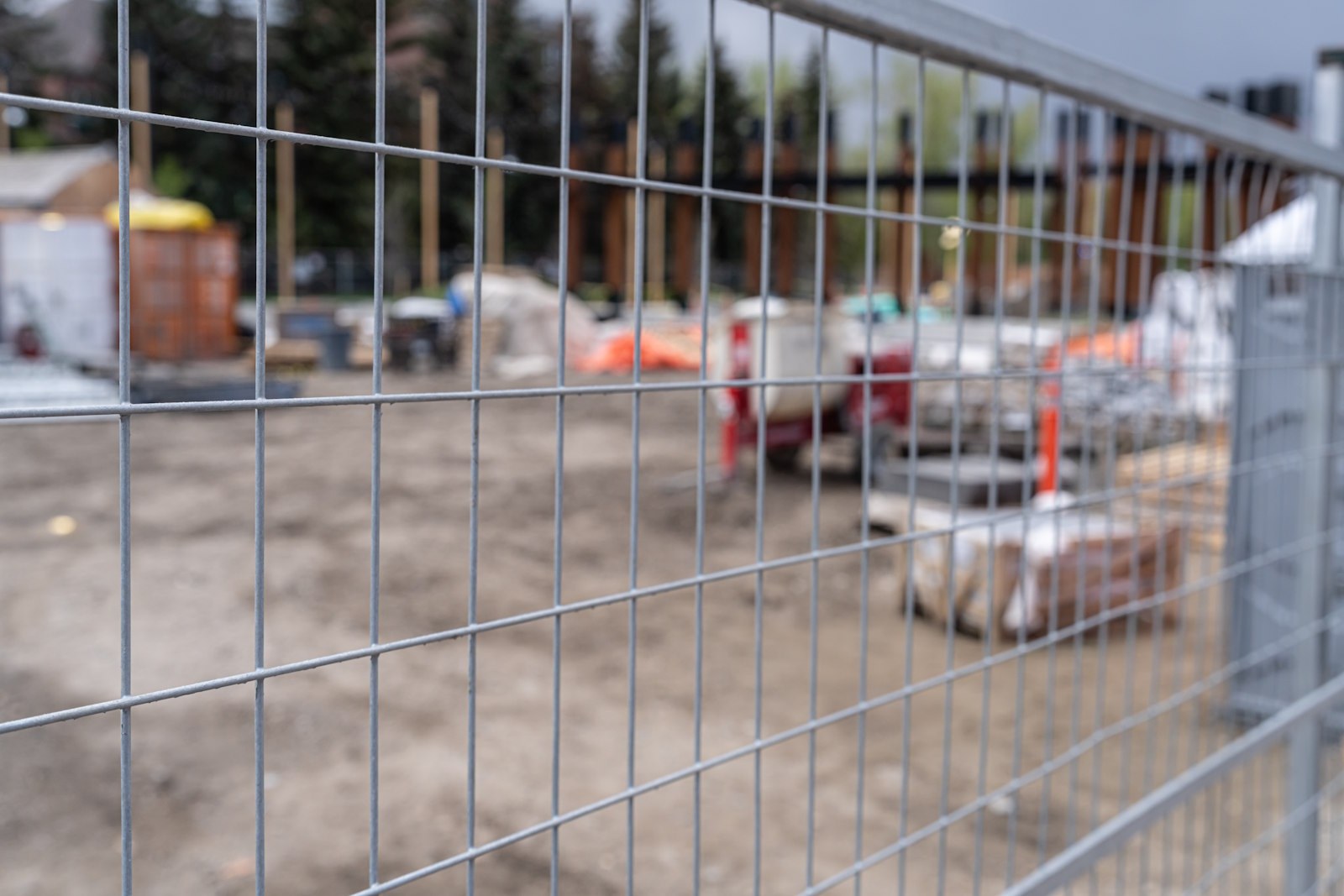
Assembly takes place without digging and without permanent interference with the ground - Simply place the panels in concrete or rubber bases and connect them with connectors. If necessary, it takes just a few hours to dismantle and move the fence.
It is this modularity that makes temporary fencing today a so practical, mobile and reusable.
Fencing that changes with construction
As work progresses, the project site is constantly changing. Stages of earthworks, structural assembly, material deliveries or finishing work require constant reorganisation of the space.
Thanks to modern fencing systems, you can be up and running in no time:
-
expand or reduce fenced area,
-
move the entrance gate to another location,
-
demarcate new zones - e.g. storage, social or transport facilities,
-
adjust the layout to security or logistical requirements.
This flexibility makes a huge practical difference - it keeps things tidy, reduces downtime and increases safety. The fence is no longer an obstacle, but a an active part of site organisation.
Lightness and durability - a combination that works
One of the greatest achievements of modern technology is the combination of lightweight construction with exceptional strength.
Today's fences are manufactured from galvanised steelwhich provides resistance to corrosion and mechanical damage, even in harsh weather conditions.
With this:
-
panels can be transport and assemble by handwithout the use of heavy equipment,
-
the fence is stable and secureeven in strong winds,
-
the system can be reuse on various investments - a real saving for construction companies.
The high-quality zinc coating protects the steel from rusting, ensuring that the fence retains its aesthetic appearance for many years.
Functionality through and through
Flexible fencing is not just about mobile panels. It is also clever accessory systemwhich increase user comfort and safety.
Modern solutions include:
-
sliding and swing gates, tailored to vehicle traffic,
-
pedestrian wickets with locks or access control,
-
stabilisers and supports to increase wind resistance,
-
solid covers or advertising banners, protecting against dust and improving aesthetics,
-
lighting and monitoring elements, ensuring safety after dark.
With these additions, the fence can be fully customised to suit the specifics of the development - from a small single-family construction site to a multi-hectare industrial complex.
Aesthetics - because construction can look good too
Although functionality is key, more and more investors are also paying attention to the appearance of the fence. After all, the construction site is often in a public space and its surroundings affect the image of the company.
Modern construction fences are characterised by even lines, clean finish and customisation options. The panels can feature the company logo, contact details or visualisations of the investment.
It's a simple way to combine tidiness with advertising and show that even a construction site can look professional.
Renting, buying or leasing - flexibility also in financing
Flexible fencing also means a flexible approach to sourcing it. Depending on the needs and scale of the project, companies can opt for:
-
Rental - ideal for short-term investments, where fast implementation and no storage after completion are important.
-
Purchase - cost-effective for long-term projects or when the company regularly carries out construction.
-
Leasing - an intermediate option that allows you to benefit from modern solutions without putting a one-off strain on your budget.
This allows the investor to match the financing model to actual needs - further proof that modern fencing is flexible not only in installation but also in cost management.
Sustainable construction - sustainability and ecology
Today's fences are created with long life and recycling in mind. The materials from which they are manufactured can be reused again and again without loss of quality.
An environmentally friendly solution, in line with the trend of sustainable construction.
Multiple use of one set of fences means less waste and less consumption of raw materials. For the investor, this is an additional benefit - financial savings combined with environmental responsibility.
The future of fencing - technology to support construction
The direction of the industry is clear: increasing automation. In the coming years, we can expect to see fences equipped with motion detectors, alarm systems and integration with video surveillance.
This will ensure that the fence becomes not only a physical barrier, but also part of the digital infrastructure of the site - responding to incidents, transmitting data and providing 24/7 surveillance of the site.
This is a natural evolution towards smart construction, where every element - even the fence - has a specific, practical function.
Summary
Flexible temporary fencing is a symbol of modern construction - combining mobility, security and functionality in a single system.
Their modular design, lightness and durability allow them to be quickly adapted to any site situation, whatever its scale and nature.
It is a fence that does not stand still, but works with you - facilitates organisation, organises space, protects equipment and supports the company's image.
In an age of increasing competition and growing demands from builders, it is precisely such solutions that offer an advantage - because where flexibility meets technology, construction becomes not only safe, but also really well organised.


